
MY WEEK WITH JACK WRANGLER
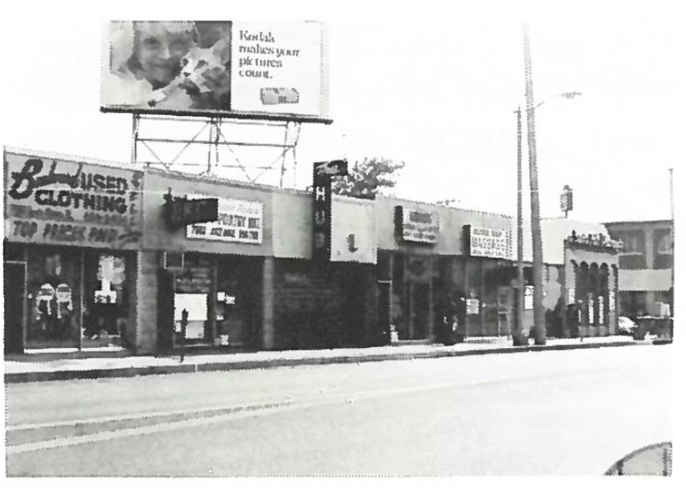
In 1976, a young Air Force serviceman I’ll call Bruce found himself on holiday in West Hollywood, wide-eyed and hungry for the scene he’d been hearing about. He walked into a working-class bar called the Hub on Santa Monica Boulevard—before it would later transform into the Eagle—carrying his suitcase like a hillbilly, trying desperately to look like he belonged.
He didn’t know it then, but that week would become one of the most intimate encounters with Jack Wrangler, the legendary pornographic star who would go on to define gay masculinity for an entire generation. A stranger’s generosity, a blond man’s charisma, and the raw sexuality of mid-1970s West Hollywood—Bruce’s recollection remains a testament to a time when gay men looked out for each other in ways that seem almost unimaginable today.
The Bar That Started a Movement
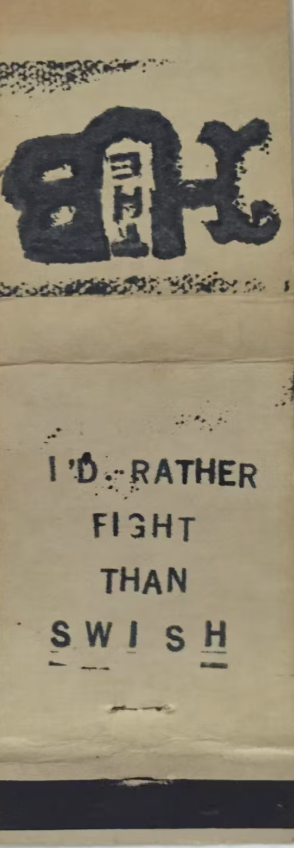
The Hub was not just any gay bar. In 1967, a group called PRIDE (Personal Rights in Defense and Education) began holding Pride Night social gatherings at the Hub. After a violent police raid at another gay bar, Silver Lake’s Black Cat Tavern, PRIDE helped organize protests there—a full two years before the landmark Stonewall Riots in Greenwich Village.
It was a space where gay men could gather openly, at least relatively. Where they could socialize and organize. Where community meant survival.
“I was sitting there having a drink with my suitcase like a real hillbilly,” Bruce remembers. “And Jack Wrangler was a bar back there at the time. This was before he got into porno—he was a legitimate actor. So he spoke to me and we talked, and he wanted to know where I was staying. And I said, I don’t know. He says, you’re welcome to stay with me.”
Just like that. An offer. An apartment on Vista Avenue. A week of hospitality from a man who would, within a few years, become one of the most recognizable men in gay pornography.
Who Was Jack Wrangler?
John Robert Stillman (July 11, 1946 – April 7, 2009), billed professionally as Jack Wrangler, was an American gay pornographic film actor, theatrical producer, director, and writer. He performed in both gay and straight films. Open about his homosexuality and adult film work throughout his career, Wrangler was an icon of the gay-liberation movement.
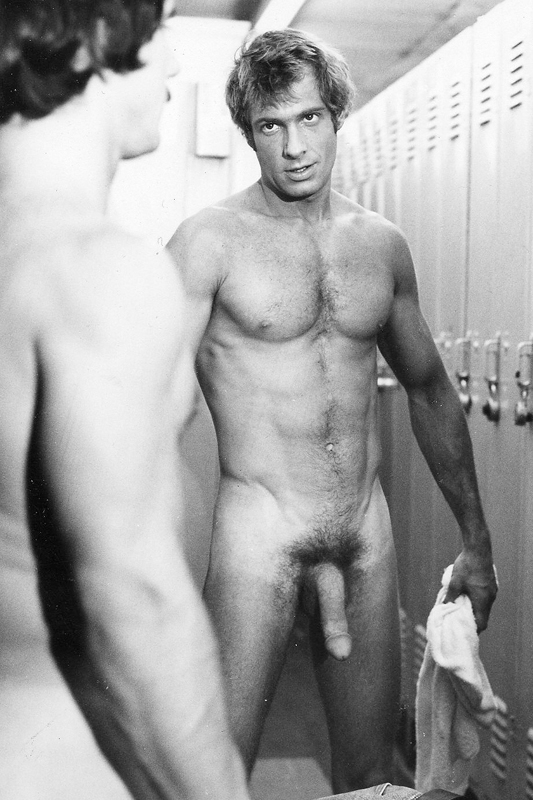
But in 1976, when Bruce met him, Wrangler wasn’t yet an icon. He was working as a barback, a handsome blond man with a magnetism that made strangers feel welcome. He appeared in over 30 gay sex films and 20 straight ones, establishing himself as a ruggedly handsome figure symbolizing openness about homosexuality amid a period of cultural shift. In 1994, he married singer Margaret Whiting, marking a notable personal and professional pivot from explicit films to mainstream entertainment.
What’s remarkable is that when Bruce met him, Wrangler was in that space between legitimacy and notoriety, between aspiration and the life he would become famous for. He was generous. He was present. He welcomed Bruce into his home without hesitation. “He couldn’t have been sweeter,” Bruce says. “He had an apartment on Vista Avenue.”
And I had it every day, honey. It was a regular dick week.
Bruce
A Week of Desire
What happened next speaks to the raw reality of that moment. Bruce was 23 years old, out since he was a kid, sexually adventurous and unapologetic about it. He describes himself as having always been like Scotty Bowers—open-minded and without shame about desire.
Wrangler welcomed him. Fed him. Made space in his life. And yes, his dick really was as big as it looked in his films. When asked directly about the experience, Bruce is forthright: “And I had it every day, honey. It was a regular dick week.”
This is the part of 1970s gay history that often gets sanitized in documentaries and academic accounts. This is the raw, corporeal reality of what it meant to be young, gay, and alive in a city that had suddenly opened its doors—however tentatively—to men like Bruce. The attraction was immediate. The sex was uncomplicated. There was no shame, no pretense. Just desire met with generosity.
West Hollywood in 1976: The Birth of a Gay Mecca
By the mid-1970s, gay men and women in L.A. became more vocal in protesting police oppression and harassment, which included those bar raids as well as entrapment schemes and arrests for dressing out of accordance with one’s perceived gender. The Hub had been one of the first places where this resistance had organized itself, years before New York’s Stonewall would become the symbol of liberation that everyone knew about.
Bruce discovered West Hollywood through a chain of fortune. He was stationed at Nellis Air Force Base, missing a flight, and met Gene Branum, a blond football-player type from Van Nuys at a gay bar in Las Vegas. Branum brought him out to California that first time, taking him to Studio One on a Saturday night. “It was like the equivalent of studio 54 New York,” Bruce recalls. “That was 75, 76.” This was when California became possible.
The beach, the sun, the visible gay community clustering along Santa Monica Boulevard—these were the things that called him back. It was in the 1970s that West Hollywood began to establish itself as a “gay ghetto” like the West Village in New York and the Castro in San Francisco. Young gay men were converging on this strip of land, creating their own world in real time.
The Generosity of Strangers
What strikes most forcefully about Bruce’s story is its portrait of gay kinship in an era before apps, before easy movement, before the infrastructure that exists now. When you arrived in town, you didn’t have a phone to call ahead. You went to a bar. You met someone. You hoped they would take you in.
“You could go into any town,” Bruce recalls, “and gay people were much friendlier and would take you in. I don’t know what it’s like today for young kids, but you know, gay people really looked out for one another. You could go in any town, you know, meet mine, they come stay with me, you know.”
This was the culture of the Hub, of the bars along Santa Monica Boulevard, of a community that understood what it meant to be a stranger in a place that could kill you, arrest you, cast you out. The solution was to build something among yourselves. To offer shelter. To say yes when a stranger walked in with a suitcase.
Jack Wrangler, before he became an icon, embodied this. He was a barback at the Hub. He saw a lost kid. He offered his home and his body and a week of his life. He couldn’t have known that decades later, Bruce would still remember the kindness—and the sex—with such clarity and gratitude.
The Shift
Bruce eventually moved to Los Angeles permanently at the end of 1977. He became a go-go dancer, was discovered by Jim French, and worked in adult films himself—a trajectory that was, for young gay men in that era, a viable path to money and visibility and community. He danced at clubs where “eight guys” would strip to easy money, “a couple hundred bucks,” smoking joints, the boundary between work and pleasure deliberately obscured.
But the week with Wrangler stayed with him. It was a snapshot of a man before fame, before the documentary called Wrangler: Anatomy of an Icon, before he published his autobiography, The Jack Wrangler Story. It was a moment when a soon-to-be gay porn star was simply a handsome man who worked as a barback and believed in helping people. Very wholesome, very Little House on the Prairie.
I don’t know what it’s like today for young kids, but you know, gay people really looked out for one another.
Bruce
Wrangler is remembered now as a symbol, an icon, the man whose body and openness helped reshape how gay men understood masculinity and desire. His charisma, which extended to an acting ability beyond the sex scenes, made him in demand by the adult film industry. He became a figure in the gay liberation movement not despite his pornography but because of it—because he refused to hide.
Yes, you can stay with me. Yes, I’ll feed you. Yes, I’ll make space in my life for you. This was the currency of gay community in 1976. Not money or status, but shelter. Protection. A willingness to say yes to your own people when the world was saying no.
It was a trust born from necessity. Gay men had to look out for each other because no one else would. The police raided the bars. Landlords wouldn’t rent to you. Your family might disown you. So you built a community that caught each other when you fell. A barback at the Hub saw a kid with a suitcase and didn’t hesitate. He opened his home. He opened his life. He protected his own.
This was the radical generosity of a community under siege. Not performative. Not posted online. Just a man seeing another man and saying: you matter, you’re welcome here, stay with me.
The Hub is gone now. The Eagle was torn down decades ago. Studio One, which opened at the same site in 1974 and remained in operation until 1988, has been demolished to make room for a hotel. The bars move, close, transform. People age. Some are gone.
Jack Wrangler is gone too—he died in 2009, years after becoming a legend. But Bruce still carries that week. He still remembers a time when gay men protected their own with a fierceness and trust that defined survival itself.
Yes, gay men open their homes to strangers now more than ever—through apps, through connections that wouldn’t have been possible in 1976. But when they do, is it rooted in that same sense of community care? That same radical solidarity born from looking out for each other because no one else would? Has the spirit of it changed, or does it still exist—just in different forms?
Maybe that hunger for community, for radical acceptance, for sexual freedom without shame—that hasn’t gone anywhere. It just looks different now. But it’s still there. Still missed.
PHOTO IMAGES OF THE HUB COURTESY OF QUEERMAPS.ORG
